Creating a relaxing home workspace is essential for maintaining focus and reducing stress, especially if you spend many hours working from home. A comfortable and calming environment not only improves your productivity but also supports your mental wellbeing. In this post, we’ll explore practical steps and ideas to help you design a workspace that feels both inviting and efficient.
Why a Relaxing Workspace Matters
When your work area is cluttered, noisy, or uncomfortable, it can lead to distractions and burnout. A relaxing workspace encourages concentration, creativity, and a positive mindset. By taking time to organize and personalize your environment, you invest in your overall work experience and health.
Choosing the Right Location
Start by selecting a spot in your home that suits your workflow and lifestyle.
– Natural light: Ideally, pick a place near a window to benefit from daylight, which can boost mood and alertness.
– Quiet atmosphere: Look for a space away from high-traffic areas or noisy appliances.
– Space and layout: Ensure there’s enough room for your desk, chair, and any equipment you need. Sufficient space helps avoid feeling cramped.
Selecting Comfortable Furniture
Your furniture plays a vital role in your comfort and posture.
– Ergonomic chair: Invest in a chair that supports your back and encourages good posture. Adjustable height and lumbar support are important features.
– Desk height: Choose a desk that matches your height or consider an adjustable desk. Sitting or standing desks can reduce fatigue.
– Footrest and accessories: Small additions like a footrest or wrist pads can enhance comfort during long work sessions.
Organizing Your Workspace
A tidy workspace contributes to a clear mind.
– Declutter regularly: Keep only the items you need on your desk. Store documents and supplies in drawers or organizers.
– Use storage solutions: Shelves, filing cabinets, and boxes help keep your space neat.
– Cable management: Use clips or sleeves to keep wires tidy and prevent tangling.
Adding Calming Elements
Incorporate features that promote relaxation and reduce stress.
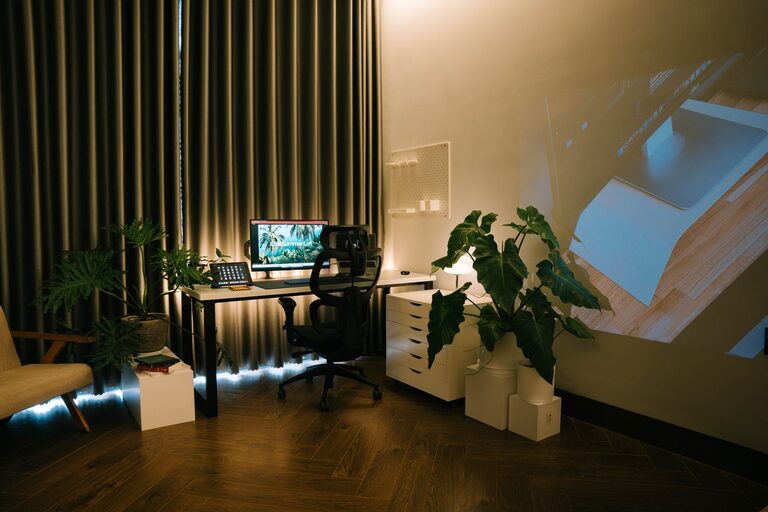
– Plants: Indoor plants improve air quality and add a touch of nature.
– Soothing colors: Soft, neutral colors like light blues or greens create a peaceful atmosphere.
– Personal touches: Photos, artwork, or meaningful objects can make the space feel welcoming without causing distraction.
Controlling Lighting and Noise
Proper lighting and noise control enhance concentration.
– Adjustable lighting: Use task lamps for focused lighting and dimmable options to reduce glare.
– Noise reduction: Consider noise-cancelling headphones or soft background music to block distractions.
– Window treatments: Curtains or blinds help regulate natural light and reduce outside noise.
Creating a Routine
A relaxing workspace supports routines that balance work and breaks.
– Set work hours: Define when you start and finish work to create boundaries.
– Take breaks: Step away regularly to stretch or move around.
– Keep it separate: Avoid using your workspace for non-work activities to maintain focus.
Technology Tips
Make sure your devices enhance, not hinder, your comfort.
– Monitor placement: Position your screen at eye level to avoid neck strain.
– Keyboard and mouse: Choose ergonomic options to reduce hand fatigue.
– Declutter desktop: Keep your computer desktop organized for easy access.
Maintaining Your Space
Consistency keeps your workspace inviting.
– Daily tidying: Spend a few minutes at the end of each day organizing your desk.
– Update decor: Refresh plants or decorations to keep the environment engaging.
– Evaluate comfort: Adjust furniture or lighting as needed to maintain comfort over time.
Conclusion
Designing a relaxing home workspace is about combining function with comfort. By choosing the right location, furniture, and decor, and maintaining organization, you create an environment that supports your productivity and wellbeing. Making these changes can help transform your work-from-home experience into one that is more enjoyable and less stressful.
Take time to personalize your space and develop habits that encourage focus and relaxation. Your workspace can become a place where work feels less like a chore and more like a positive part of your day.
About the Author